Velocity
A vector measure of speed with direction.

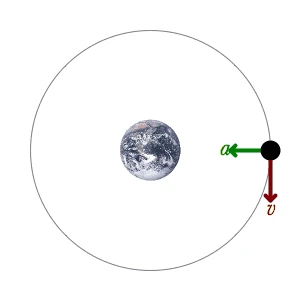
Velocity is a measurement of speed in a certain direction of motion. It is a fundamental concept in kinematics, the branch of classical mechanics that describes the motion of physical objects. Velocity is a vector quantity, meaning that both magnitude and direction are needed to define it.
- field
- Kinematics, classical mechanics
- known_for
- Definition as a vector quantity; distinction between speed and velocity; average and instantaneous velocity; relation to acceleration and displacement
Lore & Background
Velocity is defined as the rate of change of position with respect to time. The average velocity of an object over a period of time is its change in position divided by the duration of the period, given mathematically as v̄ = Δs/Δt. The instantaneous velocity is the limit of average velocity as the time interval approaches zero, calculable as the derivative of position with respect to time: v = ds/dt. From this derivative, the area under a velocity vs. time graph is the displacement, and the integral of the velocity function gives the displacement function.
Reader's Guide
Velocity is a cornerstone of kinematics, describing not just how fast an object moves but also its direction. Its vector nature distinguishes it from speed, which is only the scalar magnitude. A change in speed, direction, or both constitutes acceleration. The concept of instantaneous velocity, though initially counter-intuitive, can be thought of as the velocity an object would maintain if it stopped accelerating at that moment. Average velocity, always less than or equal to average speed, is calculated as the total displacement divided by total time. In a displacement-time graph, instantaneous velocity is the slope of the tangent line, while average velocity is the slope of the secant line between two points. The SI unit for velocity is metres per second (m/s).
Did You Know?
- Velocity is a vector quantity, requiring both magnitude and direction for its definition.
- The scalar absolute value of velocity is called speed, measured in metres per second.
- A constant velocity requires both constant speed and constant direction, meaning motion in a straight line.
- The area under a velocity vs. time graph corresponds to the displacement of the object.
More in Classical Mechanics 1-21
Spotted an error? Know more?
This is a living reference — every entry is fact-audited, and reader corrections feed straight into our audit queue. Suggest an edit · See this site's audit record