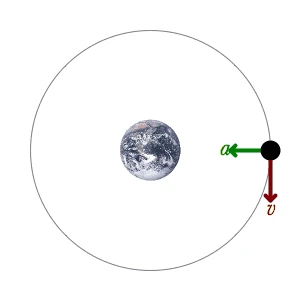
Force
A vector action causing change in motion, shape, or pressure.

SpaceX · CC0
In physics, a force is an action that can cause an object to change its velocity or its shape, or to resist other forces, or to cause changes of pressure in a fluid. The concept of force is central to classical mechanics and all three of Newton's laws of motion, and it is also revised in modern physics to rely on fundamental interactions.
- SI unit
- newton (N)
- Symbol
- F
- Type
- vector quantity
- Role in classical mechanics
- central to Newton's laws of motion
- Types in classical mechanics
- elastic, frictional, contact or normal, and gravitational
- Rotational version
- torque
- Fundamental interactions in modern physi
- strong, electromagnetic, weak, and gravitational
Lore & Background
Philosophers in antiquity used the concept of force in the study of stationary and moving objects and simple machines, but thinkers such as Aristotle and Archimedes retained fundamental errors in understanding force. Aristotle believed that motionless objects on Earth were in their natural place when on the ground and that unnatural or forced motion required continued application of a force. This theory had conceptual trouble accounting for projectiles, such as the flight of arrows, which Aristotle proposed was sustained by displaced air. Most of these misunderstandings were eventually corrected by Galileo Galilei and Sir Isaac Newton. Galileo constructed an experiment disproving Aristotelian theory, showing that bodies were accelerated by gravity independently of their mass and that objects retain their velocity unless acted on by a force.
Reader's Guide
The concept of force plays an important role in classical mechanics, where it makes ideas like pushing or pulling mathematically precise. Newton's first law states that an object at rest remains at rest and an object moving at constant speed in a straight line continues doing so unless acted on by a force. His second law gives the quantitative relationship: net force equals the rate of change of momentum. In modern physics, including relativity and quantum mechanics, the laws governing motion are revised to rely on fundamental interactions as the ultimate origin of force. The Standard Model predicts that exchanged particles called gauge bosons are the fundamental means by which forces are emitted and absorbed, with only four main interactions known: strong, electromagnetic, weak, and gravitational. High-energy particle physics observations confirmed that the weak and electromagnetic forces are expressions of a more fundamental electroweak interaction.
Did You Know?
- The SI unit of force is the newton (N).
- Force is a vector quantity, meaning both magnitude and direction are important.
- The rotational version of force is torque, which produces changes in rotational speed.
- Only four main fundamental interactions are known: strong, electromagnetic, weak, and gravitational.
Foundations and the Long Arc of Development
The story of classical mechanics begins in the seventeenth century with the foundational work of Sir Isaac Newton, whose physical concepts and mathematical methods laid the groundwork for describing how bodies move under the influence of forces. Newton was not alone in this endeavor; Gottfried Wilhelm Leibniz and Leonhard Euler contributed essential mathematical tools that made the description of motion rigorous and systematic. Over the following two centuries, a profound shift took place. Euler, Joseph-Louis Lagrange, William Rowan Hamilton, and others developed methods built around energy rather than force, giving rise to what is now called analytical mechanics, encompassing both Lagrangian and Hamiltonian formulations. These eighteenth- and nineteenth-century advances did not merely refine earlier ideas—they extended them in ways that proved so powerful they remain, with some modification, the working language of every branch of modern physics. The word "classical" itself serves as a marker of this era, distinguishing these methods from the revolutionary frameworks of the early twentieth century that ultimately exposed where classical descriptions fall short.
A Universe of Scales and Applications
Classical mechanics is remarkably broad in what it can describe. At its core, it is a theory of how forces affect the motion of macroscopic objects and bulk matter, deliberately setting aside quantum effects and, in many treatments, relativistic corrections as well. In practice, that scope covers an astonishing range: the arc of a projectile, the behavior of individual particles, the interplay of gears and levers in machinery, the trajectories of spacecraft, the orbits of planets and stars, the dynamics of entire galaxies, the deformation of solids, the flow of liquids and gases, and even the motion of macromolecules. The theory models real-world objects as point particles with negligible size, or as aggregates of rigidly connected particles when dealing with extended bodies. In its Newtonian form, a particle's motion is pinned down by just a handful of parameters—position, mass, and the forces acting on it—making the framework both elegant and extraordinarily versatile across disciplines.
Many Languages for the Same Physics
One of the most striking features of classical mechanics is that the same physical reality can be expressed through several distinct mathematical formalisms, each offering different insights and computational advantages. The Newtonian approach treats force as a central vector quantity, tracking how it accelerates a body. Analytical mechanics takes a different route, working with scalar properties of the entire system—typically its kinetic and potential energy—and deriving equations of motion from principles governing how those scalars vary. Within that family, Lagrangian mechanics operates in terms of generalized coordinates and velocities in what is called tangent bundle space, while Hamiltonian mechanics works with coordinates and momenta in phase space, the cotangent bundle of configuration space. The two are linked by a Legendre transformation, meaning they carry identical information about a system's dynamics. Beyond these, formulations such as Hamilton–Jacobi theory, Routhian mechanics, and Appell's equation of motion also exist. All of them, in fact, can be traced back to a single, widely applicable result: the principle of least action, from which Noether's theorem further connects conservation laws to the symmetries of the system.
Determinism, Chaos, and the Edges of the Theory
Classical mechanics carries a powerful promise of determinism: if you know the present state of an object that obeys its laws, you can in principle work out exactly how it will move in the future and how it has moved in the past. Yet this promise has a built-in caveat. Chaos theory demonstrates that even within a fully deterministic framework, long-term predictions quickly become unreliable, because tiny uncertainties in initial conditions amplify over time. The theory also has clear physical boundaries. It delivers accurate results for objects that are not extremely massive and whose speeds do not approach the speed of light. Once you shrink to the scale of an atom's diameter, quantum mechanics becomes necessary. When velocities near light speed, special relativity must take over. And when objects become extremely massive, general relativity is the appropriate framework. Some modern sources choose to fold relativistic mechanics into the umbrella of classical mechanics, treating it as the subject in its most developed and accurate form, but the fundamental divisions remain a useful map of where each theory applies.
Gallery





Frequently Asked Questions
Who is Force?
Force is a vector quantity representing an action that can alter an object's velocity, deform its shape, or shift pressure within a fluid. It sits at the very center of classical mechanics and underpins all three of Newton's laws of motion.
What are Force's powers or abilities?
Force can accelerate, decelerate, or redirect an object, and it can also bend or compress it. In fluids it drives pressure changes, and its rotational counterpart is known as torque.
How does Force's story end?
In modern physics the classical picture of force is reinterpreted through fundamental interactions, so the standalone concept gets absorbed into a deeper framework. Its classical role, however, remains fully intact within Newtonian mechanics.
Why is Force so important to the franchise?
Every one of Newton's three laws of motion is built around the concept of force, making it the central figure of the entire classical-mechanics narrative. Without it, the storylines of motion, equilibrium, and interaction simply fall apart.
What is Force's symbol and official unit?
Force is denoted by the symbol F and is measured in newtons (N) in the SI system. Because it is a vector quantity, both its magnitude and its direction carry meaning.
More in Classical Mechanics 1-21
Spotted an error? Know more?
This is a living reference — every entry is fact-audited, and reader corrections feed straight into our audit queue. Suggest an edit · See this site's audit record