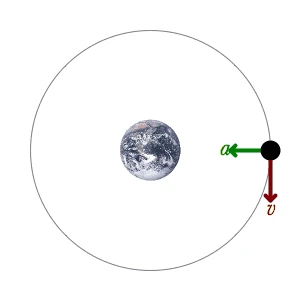
Classical Mechanics 1-21
21 entries in the Classical Mechanics compendium.
Bernoulli's principleRelates pressure, speed, and height in fluid flow.BuoyancyBuoyancy is the upward force exerted by a fluid on an immersed object.Centripetal forceForce that makes a body follow a curved path.Classical mechanicsTheory of forces and motion for macroscopic objects.DensityMass per unit volume, an intensive property of matter.Drag (physics)A force opposing motion through a fluid, dependent on velocity.Elastic modulusA measure of a material's resistance to elastic deformation.Elasticity (physics)Elasticity describes a material's ability to recover its original shape.ForceA vector action causing change in motion, shape, or pressure.FrictionForce resisting relative motion of surfaces and fluid layers.GravityGravity is the fundamental attraction between objects with mass.InertiaObjects persist in motion or rest unless compelled by force.MassIntrinsic property measuring inertia and gravitational attraction.MomentumVector quantity equal to mass times velocity.PressurePressure is force per unit area, a scalar quantity.TorqueTorque is the rotational analogue of linear force.VelocityA vector measure of speed with direction.ViscosityViscosity quantifies a fluid's internal resistance to flow.Work (physics)Energy transferred by force along a displacement.Weighing scaleA device for measuring mass or weight using equilibrium.WaveA propagating disturbance that transfers energy and information.
Browse Classical Mechanics 1-21 in the interactive codex →