Gravity
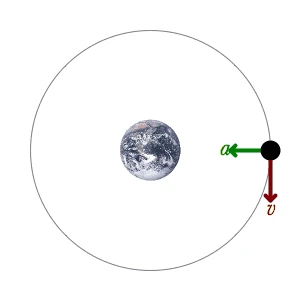
Gravity is the fundamental attraction between objects with mass.

https://commons.wikimedia.org/wiki/User:Nicoguaro · CC BY-SA 3.0
Gravity, from Latin 'gravitas' meaning weight, also known as gravitation or gravitational interaction, is a fundamental interaction described as the force that draws material objects towards each other. It is a primary driver for the large-scale structures in the universe, causing hydrogen gas to coalesce into stars, galaxies, and clusters, and has an infinite range though its effects weaken with distance.
- field
- Physics
- known_for
- Fundamental interaction; described by Newton's law of universal gravitation and general relativity
- key_proponents
- Albert Einstein, Isaac Newton, Galileo Galilei, Johannes Kepler
- first_formal_description
- Newton's law of universal gravitation
Lore & Background
The most extreme example of this curvature is a black hole, from which nothing—not even light—can escape past the event horizon. For most applications, gravity is sufficiently well approximated by Newton's law of universal gravitation, which describes gravity as an attractive force proportional to the product of masses and inversely proportional to the square of the distance between them. Historically, ancient scholars explored gravity's nature. In Ancient Greece, Aristotle believed each classical element had a natural place, with earth at the center. Later, the Indian mathematician Brahmagupta proposed gravity as an attractive force drawing objects to Earth, using the term gurutvākarṣaṇ. During the Scientific Revolution, Galileo Galilei's measurements of balls rolling down inclines established that gravitational acceleration is the same for all objects, and he proved that distance traveled by a falling object is proportional to the square of time elapsed.
Reader's Guide
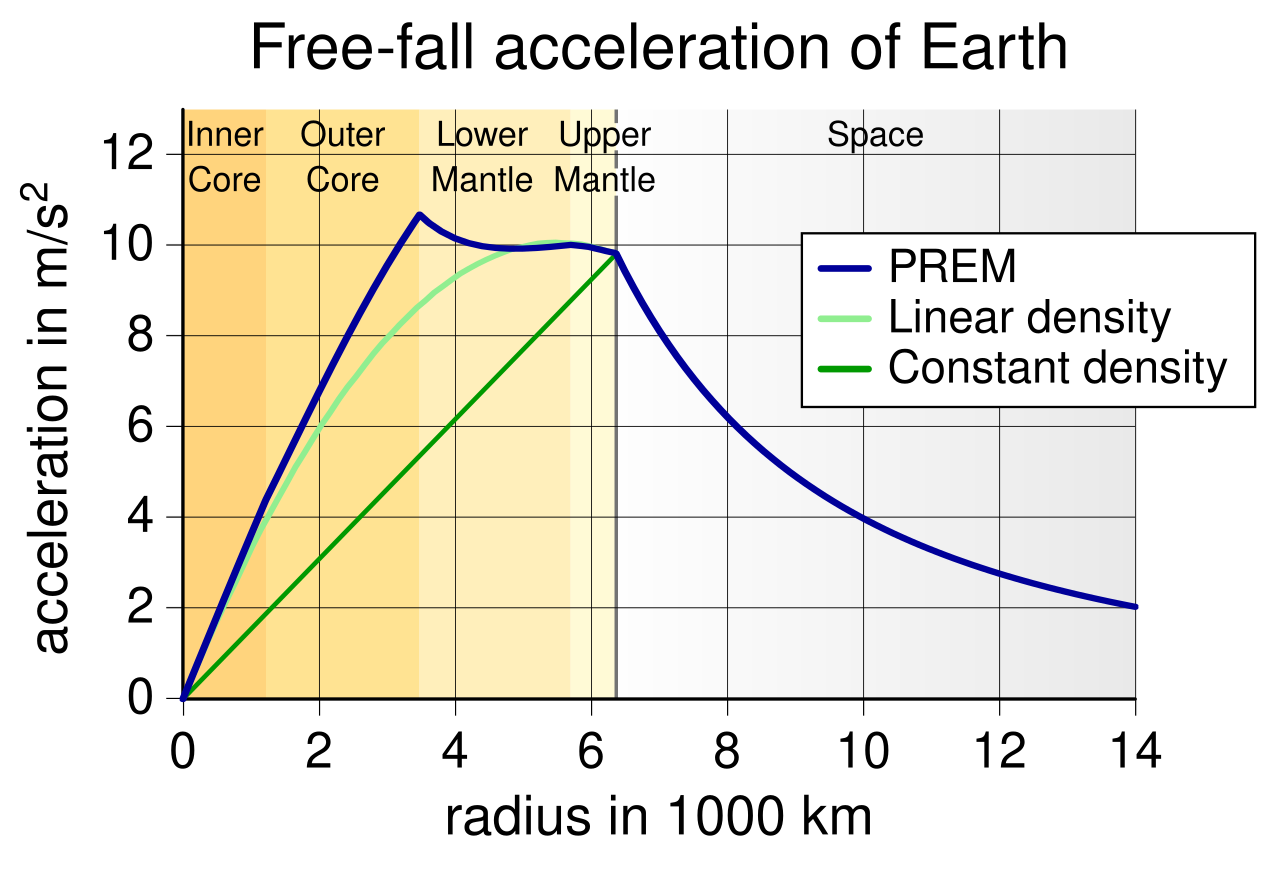
Gravity is considered one of four fundamental interactions. The electromagnetic force law is similar to gravity's, but the ratio of gravitational attraction of two electrons to their electrical repulsion is 1 to 4.17×10^42, so gravity is negligible at subatomic scales. It becomes the most significant interaction at astronomical scales, determining the motion of satellites, planets, stars, galaxies, and even light. The equivalence principle—that inertial mass equals gravitational mass—has been tested experimentally to more than one part in a trillion. On Earth, gravity operates toward the center, modified by centrifugal effects from rotation. It gives weight to physical objects and is essential for surface water waves, lunar tides, and weather patterns. Gravity also guides plant growth through gravitropism and influences fluid circulation in multicellular organisms. Scientists continue to seek a theory of quantum gravity to unify gravity with other fundamental interactions in a theory of everything.
Did You Know?
- Gravity has an infinite range, though its effects become weaker as objects get farther away.
- The gravitational attraction between clouds of primordial hydrogen and dark matter in the early universe caused hydrogen to coalesce into stars.
- The ratio of gravitational attraction of two electrons to their electrical repulsion is 1 to 4.17×10^42.
- The equivalence principle—that inertial mass equals gravitational mass—has been tested to more than one part in a trillion.
Gallery



Frequently Asked Questions
Who is Gravity?
Gravity is the fundamental interaction that pulls objects with mass toward one another, a name rooted in the Latin word 'gravitas,' meaning weight. It is one of the four basic forces in physics and operates over an infinite range, though its pull fades as distance grows.
What are Gravity's powers and role?
Gravity is the chief architect of cosmic structure, drawing hydrogen gas together until it ignites into stars, galaxies, and vast clusters. It acts on all matter and energy with no known way to shield against it, making it the most pervasive force in the universe.
How does Gravity's story end?
Gravity has no known expiration or 'off switch' in current physics; it is a permanent, ever-present interaction. Its influence simply weakens with distance but never drops to absolute zero.
Why is Gravity important to the classical mechanics canon?
It is the force behind planetary orbits, tides, and projectile trajectories, forming the observable backbone of Newtonian mechanics. Without it, the entire classical-mechanics framework would lose its most consequential and universally felt force.
Who are Gravity's key proponents or 'handlers'?
Isaac Newton first codified it mathematically through his law of universal gravitation, and Albert Einstein later reinterpreted it as the curvature of spacetime in general relativity. Galileo Galilei and Johannes Kepler also laid essential groundwork by describing how gravity governs falling bodies and planetary motion.
More in Classical Mechanics 1-21
Spotted an error? Know more?
This is a living reference — every entry is fact-audited, and reader corrections feed straight into our audit queue. Suggest an edit · See this site's audit record