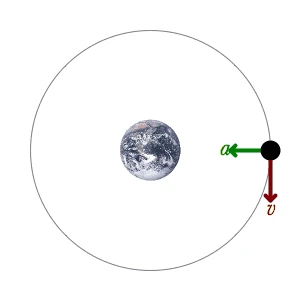
Friction
Force resisting relative motion of surfaces and fluid layers.

ترتيل سيد احمد · CC BY-SA 4.0
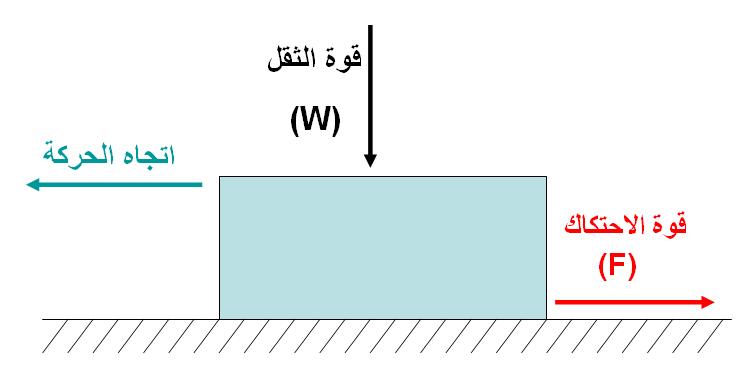
Friction is the force resisting the relative motion of solid surfaces, fluid layers, and material elements sliding or grinding against each other. Friction accounts for about 20% of the total energy expenditure of the world and can lead to wear, performance degradation, or damage to components.
- field
- Physics, Engineering
- known_for
- Force resisting relative motion; types include dry, fluid, lubricated, skin, and internal friction
- energy_impact
- Frictional energy losses account for about 20% of total world energy expenditure
- study_name
- Tribology
Lore & Background
Friction has been studied for over two millennia. that 'it is easier to further the motion of a moving body than to move a body at rest'. Charles-Augustin de Coulomb investigated four main factors: the nature of materials, surface area, normal pressure, and time of repose, and distinguished between static and dynamic friction.
Reader's Guide
Friction is a fundamental force with profound practical and theoretical significance. The classic empirical laws—Amontons' first law (friction proportional to load), second law (friction independent of apparent contact area), and Coulomb's law (kinetic friction independent of sliding velocity)—remain foundational in engineering. In the 20th century, Frank Philip Bowden and David Tabor showed that actual contact area between surfaces is a tiny fraction of apparent area, explaining Amontons' first law. The atomic force microscope (ca. Frictional energy losses account for about 20% of the world's total energy expenditure, making friction a critical factor in efficiency, wear, and design across all mechanical systems.
Did You Know?
- Frictional energy losses account for about 20% of the total energy expenditure of the world.
A Science Spanning Scales
Frictional contact mechanics is not confined to a single level of observation. At the macroscopic level, it governs how entire bodies move when they touch—think of a rubber ball bouncing off a floor, where the total force against indentation and lateral displacement tells the story. Step down to the intermediate scale and the focus shifts to local stresses, strains, and deformations right in and around the contact zone. This is the realm of tire-pavement interaction, railway wheel-rail contact, and roller bearing analysis, where engineers need to understand wear and damage at the surface. At the microscopic and nano-scales, the same principles help researchers probe the very origin of friction in tribological systems and design precision instruments such as atomic force microscopes and micro-electro-mechanical systems. The Wikipedia page itself concentrates on that middle ground: extracting fundamental insight into stresses and deformations within the contact patch without getting bogged down in the detailed mechanisms that produce them.
A Long Line of Thinkers
The intellectual history of friction stretches back to Leonardo da Vinci and continues through Guillaume Amontons, John Theophilus Desaguliers, Leonhard Euler, and Charles-Augustin de Coulomb, who collectively built the early framework of frictional behavior. Nikolai Pavlovich Petrov, Osborne Reynolds, and Richard Stribeck later layered lubrication theory on top. On the deformation side, Robert Hooke and Joseph Louis Lagrange worked in the 17th and 18th centuries, while d'Alembert and Timoshenko carried the thread into the 19th and 20th. Heinrich Hertz's classical contribution to contact mechanics stands out, and Boussinesq and Cerruti provided fundamental solutions for the linearly elastic regime. The first true frictional contact solutions came from F.W. Fromm (1927), who independently derived the creep-versus-creep-force relation for rolling cylinders using Coulomb's dry friction law—results directly applicable to railway locomotive traction and hunting oscillation. C.
The Stick-Slip Puzzle
At the heart of every frictional contact problem lies a deceptively simple observation: the stresses at the surface of each body are not uniform. They vary from point to point, and so do the resulting strains, deformations, and even the motion of individual particles. In one part of the contact patch, the two surfaces adhere and move together; in another, they slide past each other. That local relative sliding is called micro-slip, and it is the engine behind fretting wear—because wear only occurs where power is actually dissipated, which demands both stress and local relative displacement. Complicating matters further, the size and shape of the contact patch itself, along with the boundaries between its adhesion and slip regions, are generally unknown before the analysis begins. This means the geometry of the problem is part of what must be solved, not something given upfront.
From Theory to Computation
Johnson offered an approximate approach for three-dimensional frictional problems with Hertzian geometry, revealing that spin creepage—symmetric about the contact center—produces a net lateral force because of fore-aft differences in traction distribution. Hans Pacejka contributed the influential magic tire formula for road-tire interaction. By the 1970s, numerical methods proliferated: variational approaches rooted in Duvaut and Lion's existence and uniqueness theories evolved into finite element methods for general geometries (Laursen, Wriggers) and into half-space-based models like Kalker's CONTACT for smooth-edged, linearly elastic contacts. Because these rigorous methods demand heavy computation, approximate alternatives such as Kalker's FASTSIM, the Shen-Hedrick-Elkins formula, and Polach's approach were developed for practical rolling contact analysis.
Gallery

Frequently Asked Questions
Who is Friction?
Friction is the resistive force that opposes relative sliding, grinding, or rolling between solid surfaces, fluid layers, and internal material elements. It acts whenever two bodies are pressed together and attempt to move past one another.
What are Friction's known types and abilities?
Friction appears in several distinct forms—dry, fluid, lubricated, skin, and internal—each governing a different contact regime. Collectively, these modes are responsible for roughly 20% of all energy expended in the world.
How does Friction's story end?
Friction has no narrative arc because it is a persistent physical interaction rather than a character with a plot. Its long-term consequence, however, is progressive wear, performance degradation, and eventual structural damage to moving components.
Why is Friction important to the canon?
Without Friction, everyday actions like walking, gripping, or braking would be impossible, and the roughly one-fifth of global energy lost to resistive forces would vanish. It anchors both practical engineering design and foundational classical-mechanics theory.
What is Friction's dedicated field of study?
The discipline devoted to understanding Friction is called Tribology, which spans physics and engineering. It examines contact mechanics, lubrication behavior, and wear processes in moving systems.
More in Classical Mechanics 1-21
Spotted an error? Know more?
This is a living reference — every entry is fact-audited, and reader corrections feed straight into our audit queue. Suggest an edit · See this site's audit record