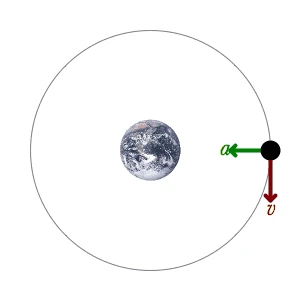
Centripetal force
Force that makes a body follow a curved path.

User:Tomia · CC BY 2.5
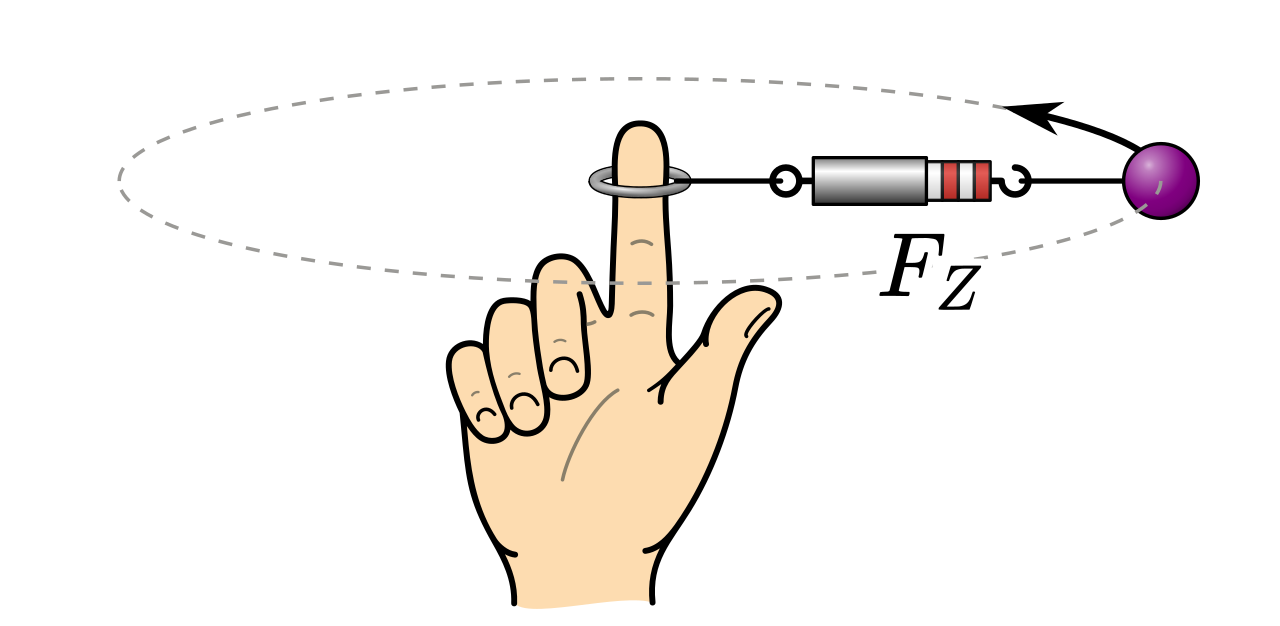
Centripetal force is the force that makes a body follow a curved path. The term was coined by Isaac Newton, who described it as 'a force by which bodies are drawn or impelled, or in any way tend, towards a point as to a centre'.
- coined_by
- Isaac Newton
- formula
- F_c = m v^2 / r
- direction
- Orthogonal to motion, toward center of curvature
- key_application
- Gravity provides centripetal force for astronomical orbits
Lore & Background
The concept of centripetal force originates from Latin centrum 'center' and petere 'to seek'. Isaac Newton coined the term, describing it as a force by which bodies are drawn or impelled towards a point as to a centre. In Newtonian mechanics, gravity provides the centripetal force causing astronomical orbits.
Reader's Guide
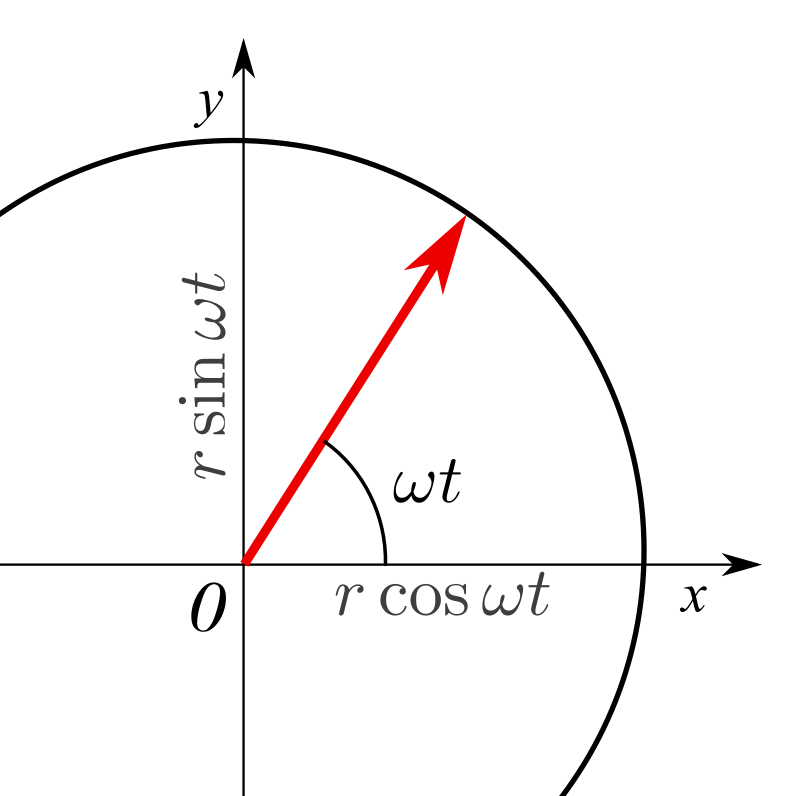
Centripetal force is fundamental to understanding curved motion in physics. Its magnitude is given by F_c = m v^2 / r, where v is tangential speed and r is radius of curvature. The force is always directed toward the center of curvature. The speed is squared, so twice the speed requires four times the force at a given radius. The force can also be expressed in terms of angular velocity ω (F_c = m r ω^2) or orbital period T (F_c = m r (2π/T)^2). In particle accelerators, where velocity approaches the speed of light, relativistic mass increases inertia, requiring greater force for the same centripetal acceleration.
Did You Know?
- Isaac Newton coined the term 'centripetal force'.
- The centripetal force is always orthogonal to the motion of the body.
- In Newtonian mechanics, gravity provides the centripetal force causing astronomical orbits.
Origins and Naming
The term centripetal force carries a distinctly Latin lineage, drawn from two roots: centrum, meaning center, and petere, meaning to seek. Together they paint a vivid picture of an influence that perpetually aims for the middle. While the idea of bodies curving around a point had been discussed in various forms, it was Isaac Newton who formally coined the term and gave it a precise physical meaning. He characterized it as the influence that draws, pushes, or otherwise steers bodies toward a central point. This phrasing captures the essential character of the force: it is not a single physical interaction but rather a role that any force can play when its net effect pulls an object inward along a curved trajectory. The Latin etymology thus mirrors the underlying physics perfectly—something is always 'seeking the center,' whether that center is the hub of a spinning wheel, the sun anchoring a planetary orbit, or simply the instantaneous center of curvature of any arbitrary path in space.
The Mathematical Framework
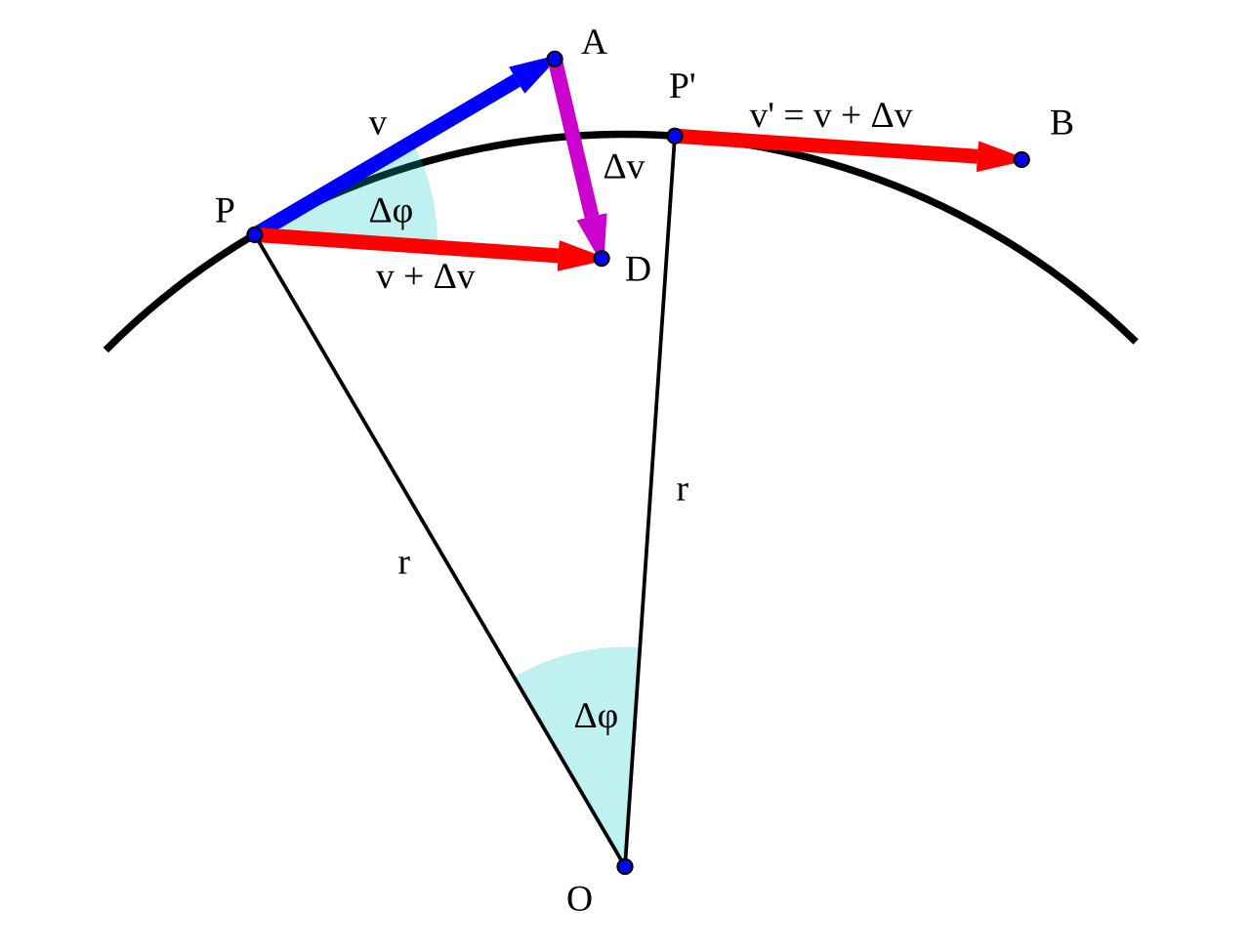
His work established that an object traveling at tangential speed v along a path with radius of curvature r experiences an inward acceleration equal to v squared divided by r. This elegant result connects three fundamental quantities—speed, radius, and acceleration—into a single compact expression. Building on this kinematic foundation, Newton's second law then bridges the gap from acceleration to force. Since a net force is the cause of acceleration and is proportional to mass, the centripetal force takes the form of mass times v squared over r. The derivation itself rests on a beautiful geometric argument: by comparing the velocity vectors at two nearby instants, one identifies two similar isosceles triangles, one built from the change in velocity and the speed, the other from the change in position and the radius. Taking the limit as the time interval shrinks to zero yields the celebrated formula that has governed orbital mechanics and circular motion ever since.
Geometry of Curved Motion
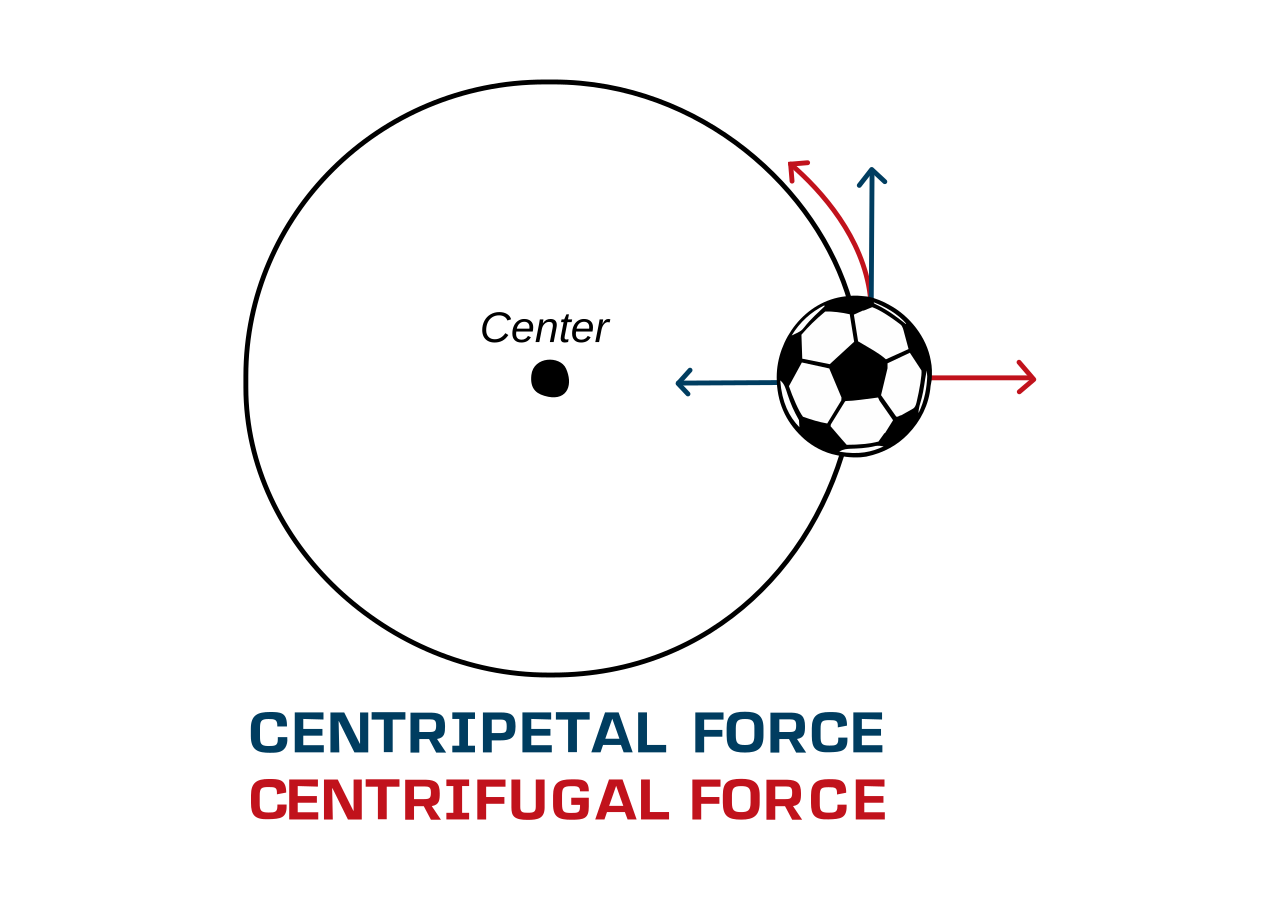
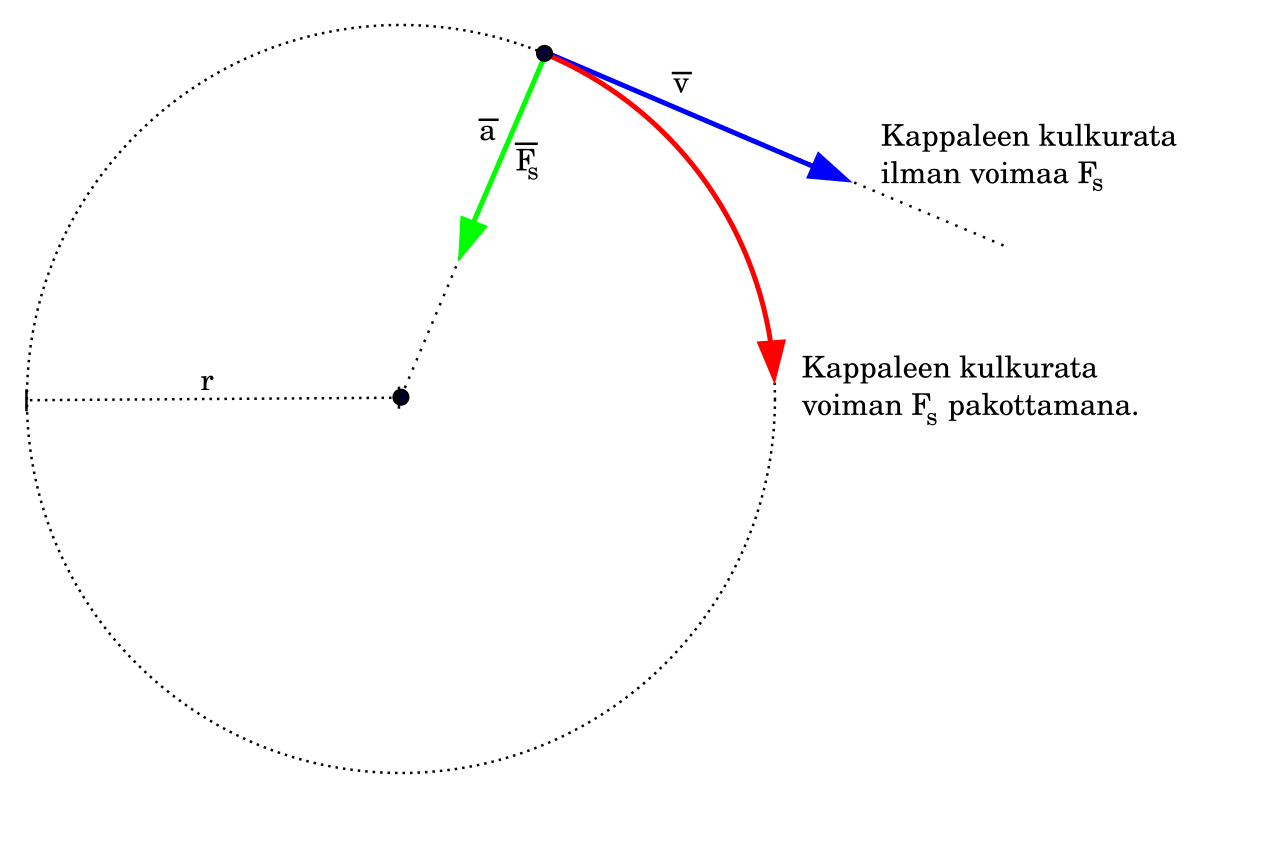
One of the most striking features of centripetal force is its geometric character. Regardless of the specific physical interaction producing it—tension in a string, friction between tires and road, or the gravitational pull of a star—the force always points in a very specific direction: orthogonal to the instantaneous velocity of the body and aimed toward the fixed point known as the center of curvature. In the special case of uniform circular motion, this direction simplifies to along the radius toward the center of the circle, making the geometry particularly intuitive. The velocity vector at any moment is tangent to the path, and the centripetal acceleration is always perpendicular to it. This orthogonality means the force changes the direction of motion without altering its speed in the uniform case. The concept of the instantaneous center of curvature generalizes this idea to any arbitrary curved path, not just perfect circles, ensuring the framework applies universally to all non-straight trajectories in Newtonian mechanics.
Celestial Applications
Perhaps the grandest and most consequential application of centripetal force appears in the heavens. In Newtonian mechanics, the gravitational attraction between massive bodies serves as the centripetal force that keeps planets, moons, and other celestial objects in their orbital paths. Rather than flying off in straight lines—as inertia alone would dictate—these bodies are continuously drawn inward by gravity, which plays the role of the inward-seeking influence described in Newton's original definition. The same mathematical framework that governs a stone swung on a string or a car rounding a curve applies equally to the Earth circling the Sun or the Moon circling the Earth. The radius of curvature in these cases is the orbital radius, and the tangential speed is the orbital velocity. This unification of terrestrial and celestial mechanics was one of the great triumphs of Newtonian physics, demonstrating that the same centripetal force principle threads through both the smallest laboratory demonstrations and the vast architecture of the solar system.
Gallery

Frequently Asked Questions
Who is Centripetal force?
Centripetal force is the inward-pulling agent that keeps any object locked onto a curved trajectory instead of letting it drift off in a straight line. The name was minted by Isaac Newton, who framed it as a force drawing bodies toward a central point.
What are Centripetal force's powers and role?
Its sole job is to redirect a moving body at a right angle to its velocity, bending the path into a circle or arc. The strength follows F_c = m v²/r, so it grows with mass and the square of speed but shrinks as the radius of the curve widens.
How does Centripetal force's story end?
The instant the inward pull disappears—whether a tether snaps or gravitational attraction weakens—the object immediately departs along a straight tangent to the curve it was tracing. The force has no lingering aftermath; it simply ceases to act the moment its source is removed.
Why is Centripetal force important?
Without it, planets would streak off in straight lines rather than orbiting the Sun, and satellites could not hold their assigned paths. It is the mechanism through which gravity sustains every astronomical orbit we observe.
Who coined the term Centripetal force?
Isaac Newton introduced the phrase, defining it as a force by which bodies are drawn, impelled, or tend toward a point as to a centre. His formulation became the foundation on which all later orbital-mechanics calculations rest.
More in Classical Mechanics 1-21
Spotted an error? Know more?
This is a living reference — every entry is fact-audited, and reader corrections feed straight into our audit queue. Suggest an edit · See this site's audit record